Crypto Monthly Review — September 2026: Authorization by Infrastructure
CLARITY died in the Senate 49 to 50, and the rails shipped anyway: a 21-bank dollar stablecoin, tokenized deposits live, the CFTC writing by guidance what Congress would not pass. September 2026, in one monthly piece.
|=|=|=|=|=|=|=|=|=|=|=|=|=|=|=|=|=|=|=|
CACHE256 | MONTHLY REVIEW
|=|=|=|=|=|=|=|=|=|=|=|=|=|=|=|=|=|=|=|
SEPTEMBER 2026 · September 1 – September 30
// Monthly Review // First edition of the monthly format
Underneath, the macro regime that carried the August melt-up quietly reversed. A hot August payrolls print, about 162,000 against a consensus near 56,000, pushed rate-hike odds above 60% and tightened the backdrop; bitcoin traded through the $80,000s and ended the month near $83,000 to $84,000, while ether sat near $2,700 and gold hovered around $4,200. The debasement tailwind did not vanish, but it stopped doing the work.
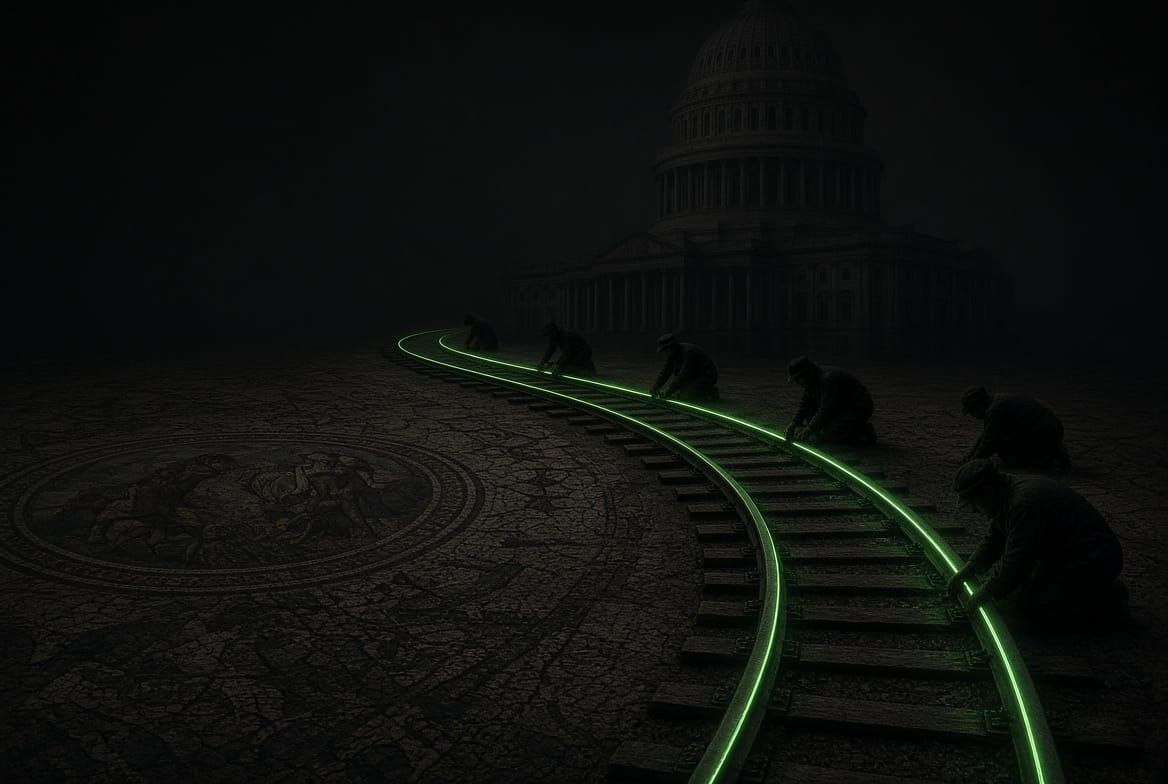
The structural read of September: the statute is not the thing that decides anymore. When the bill stalled, the rails did not pause; the incumbents and the agencies simply routed around Congress, which is the clearest sign yet that the infrastructure, not the legislation, is where the authorization now happens, and where it is owned.
• Twenty-one banks commit to a joint dollar stablecoin (early Sep): Goldman, Bank of America, Citi, Wells Fargo, UBS and Fidelity among a consortium forming an issuing company, with an H1-2027 launch target. The banks are not joining a stablecoin; they are becoming the issuers.
• Tokenized-deposit rails went live (Sep 5–8): DBS and Citi settled a weekend cross-border dollar payment on Swift's digital ledger (Sep 5); US Bank piloted its own dollar stablecoin (USBDC); a Korean bank placed a $100M digital bond via Euroclear. The deposit itself is now a programmable, 24/7 instrument.
• The agencies routed around the statute (Sep 17–24): the CFTC filed rulemakings with the White House (Sep 17) and then issued guidance letting regulated firms hold tokenized assets and keep blockchain records (Sep 24); the ECB launched Pontes for central-bank-money settlement (Sep 21); ESMA made AI and tokenization supervisory priorities from 2027. The executive moved exactly where the legislature stalled.
• The bank-charter land-grab accelerated (Sep 9): Block applied for a national trust charter for bitcoin custody, and another firm cleared preliminary OCC approval. Custody is being pulled inside the chartered perimeter.
• The sanctions and enforcement regime hardened (Sep 14–22): the DOJ sought a $61M forfeiture tied to Iranian oil (Sep 14), Treasury sanctioned an IRGC-linked exchange (Sep 17), and federal prosecutors were reported probing Binance over sanctions exposure (Sep 22). The compliant rail and the enforcement rail are being built together.
• MiCA's politics surfaced (Sep): reporting (WSJ) said ECB President Lagarde had personally intervened against Binance's Greek license; Binance had withdrawn the application earlier in 2026. Reported, not confirmed, but the signal is that the institution building the tokenization rails is also gatekeeping who may issue on them.
• 2027: ESMA's AI and tokenization supervisory priorities take effect in the EU.
• October 19: CME is set to launch Bitcoin Cash and Uniswap futures (pending regulatory review; single-sourced, confirm before relying on it).
• Post-election, no date set: a House revote on market-structure legislation has been floated. Until it has a date, the agencies keep writing the rules the statute did not.
• We Built the Rails and Handed Them Over · The thesis the month confirmed.
• The GENIUS Act: Stablecoins and the Programmable Perimeter · The stablecoin law behind the bank-consortium coin.
• The Custodian-State Configuration · The control frame for a market settling on owned rails.
• MiCA vs US Crypto Regulation · The two regimes behind the month's enforcement moves.
• Explore the Trends archive
This is crypto strategic intelligence. Not financial advice. You are sovereign.
CACHE256 | MONTHLY REVIEW
|=|=|=|=|=|=|=|=|=|=|=|=|=|=|=|=|=|=|=|
SEPTEMBER 2026 · September 1 – September 30
// Monthly Review // First edition of the monthly format
// MAIN TREND: Authorization by Infrastructure: The Month the Rulebook Failed and the Rails Shipped Anyway
In September the US legislative route to a crypto market-structure law stalled, and it changed almost nothing, because the institutions that the law was meant to authorize had already started building the thing themselves. The CLARITY Act failed a Senate cloture vote 49 to 50 on September 15, eleven short of the sixty it needed and with no Democratic support, and by month's end was stuck in limbo, a reconsideration motion filed but no path to the floor. In the same weeks a consortium of roughly twenty-one banks, Goldman Sachs, Bank of America, Citi, Wells Fargo, UBS and Fidelity among them, committed to issuing a joint dollar stablecoin targeted for the first half of 2027; DBS and Citi settled a cross-border tokenized-deposit payment over a weekend on a bank-settlement ledger; US Bank piloted its own dollar stablecoin (USBDC); the ECB launched Pontes to settle tokenized assets in central-bank money; and the CFTC, the agency CLARITY would have empowered, filed rulemakings with the White House within two days of the vote and, a week later, issued guidance letting regulated firms hold tokenized assets and keep their records on a blockchain.Underneath, the macro regime that carried the August melt-up quietly reversed. A hot August payrolls print, about 162,000 against a consensus near 56,000, pushed rate-hike odds above 60% and tightened the backdrop; bitcoin traded through the $80,000s and ended the month near $83,000 to $84,000, while ether sat near $2,700 and gold hovered around $4,200. The debasement tailwind did not vanish, but it stopped doing the work.
The structural read of September: the statute is not the thing that decides anymore. When the bill stalled, the rails did not pause; the incumbents and the agencies simply routed around Congress, which is the clearest sign yet that the infrastructure, not the legislation, is where the authorization now happens, and where it is owned.
// SIGNALS
• CLARITY stalled in the Senate (cloture failed Sep 15): the crypto market-structure bill failed cloture 49 to 50, eleven votes short, with zero Democratic support. A reconsideration motion was filed, so it is in limbo rather than formally dead, but with no path to the floor this cycle.• Twenty-one banks commit to a joint dollar stablecoin (early Sep): Goldman, Bank of America, Citi, Wells Fargo, UBS and Fidelity among a consortium forming an issuing company, with an H1-2027 launch target. The banks are not joining a stablecoin; they are becoming the issuers.
• Tokenized-deposit rails went live (Sep 5–8): DBS and Citi settled a weekend cross-border dollar payment on Swift's digital ledger (Sep 5); US Bank piloted its own dollar stablecoin (USBDC); a Korean bank placed a $100M digital bond via Euroclear. The deposit itself is now a programmable, 24/7 instrument.
• The agencies routed around the statute (Sep 17–24): the CFTC filed rulemakings with the White House (Sep 17) and then issued guidance letting regulated firms hold tokenized assets and keep blockchain records (Sep 24); the ECB launched Pontes for central-bank-money settlement (Sep 21); ESMA made AI and tokenization supervisory priorities from 2027. The executive moved exactly where the legislature stalled.
• The bank-charter land-grab accelerated (Sep 9): Block applied for a national trust charter for bitcoin custody, and another firm cleared preliminary OCC approval. Custody is being pulled inside the chartered perimeter.
• The sanctions and enforcement regime hardened (Sep 14–22): the DOJ sought a $61M forfeiture tied to Iranian oil (Sep 14), Treasury sanctioned an IRGC-linked exchange (Sep 17), and federal prosecutors were reported probing Binance over sanctions exposure (Sep 22). The compliant rail and the enforcement rail are being built together.
• MiCA's politics surfaced (Sep): reporting (WSJ) said ECB President Lagarde had personally intervened against Binance's Greek license; Binance had withdrawn the application earlier in 2026. Reported, not confirmed, but the signal is that the institution building the tokenization rails is also gatekeeping who may issue on them.
// WHAT TO WATCH · DATED
• H1 2027: the twenty-one-bank dollar stablecoin's launch target. Watch whether a bank-owned coin actually ships, and how permissioned it is.• 2027: ESMA's AI and tokenization supervisory priorities take effect in the EU.
• October 19: CME is set to launch Bitcoin Cash and Uniswap futures (pending regulatory review; single-sourced, confirm before relying on it).
• Post-election, no date set: a House revote on market-structure legislation has been floated. Until it has a date, the agencies keep writing the rules the statute did not.
// CACHE256 READ
September extends a line this publication has tracked all year: the state became a participant, then the owners moved the assets onchain, and now the statute meant to govern the move has failed while the move continues without it. The tension worth holding: the same ECB building settlement rails reportedly moved against an issuer under MiCA, and the same Congress that could not pass a rule watched the CFTC write one by guidance. Authorization is migrating from law, which is contestable and public, to infrastructure, which is owned and permissioned. That is the disintermediation illusion in its mature form: not a market without gatekeepers, but a market whose gatekeepers no longer need a vote. Whether a compliant stablecoin run by a bank consortium is still the instrument the sector wanted is the question the next editions will test.// RELATED READING
• Weekly Trends W35 · Tokenize Everything, Own the Rail · The last weekly edition: the owners start building the rails. September is what came next.• We Built the Rails and Handed Them Over · The thesis the month confirmed.
• The GENIUS Act: Stablecoins and the Programmable Perimeter · The stablecoin law behind the bank-consortium coin.
• The Custodian-State Configuration · The control frame for a market settling on owned rails.
• MiCA vs US Crypto Regulation · The two regimes behind the month's enforcement moves.
• Explore the Trends archive
// REFERENCES
Reporting drawn from the Cache256 daily intelligence feed, September 2026. Load-bearing items by outlet: CLARITY cloture (Sep 15) and reconsideration (The Defiant, CoinDesk); 21-bank stablecoin consortium (Decrypt, CoinDesk); DBS–Citi tokenized-deposit settlement (Sep 5) and US Bank USBDC stablecoin pilot (CoinDesk); CFTC rulemaking filing and tokenization guidance, ECB Pontes, ESMA 2027 priorities (CoinDesk); OCC trust-charter applications (CoinDesk); Binance sanctions probe (CoinDesk citing Bloomberg) and the Lagarde–Binance intervention, reported not confirmed (CoinDesk citing The Wall Street Journal). Mainstream primaries (Reuters, Bloomberg, WSJ, FT) to be confirmed live before any single claim is treated as load-bearing; the CME October 19 listing and the US Bank pilot are single-sourced and flagged as such above.This is crypto strategic intelligence. Not financial advice. You are sovereign.
// CACHE256 · MONTHLY REVIEW · SEPTEMBER 2026 · NOT FINANCIAL ADVICE · YOU ARE SOVEREIGN