BIS Innovation 2025: Unified Ledgers Are Domesticating Blockchain
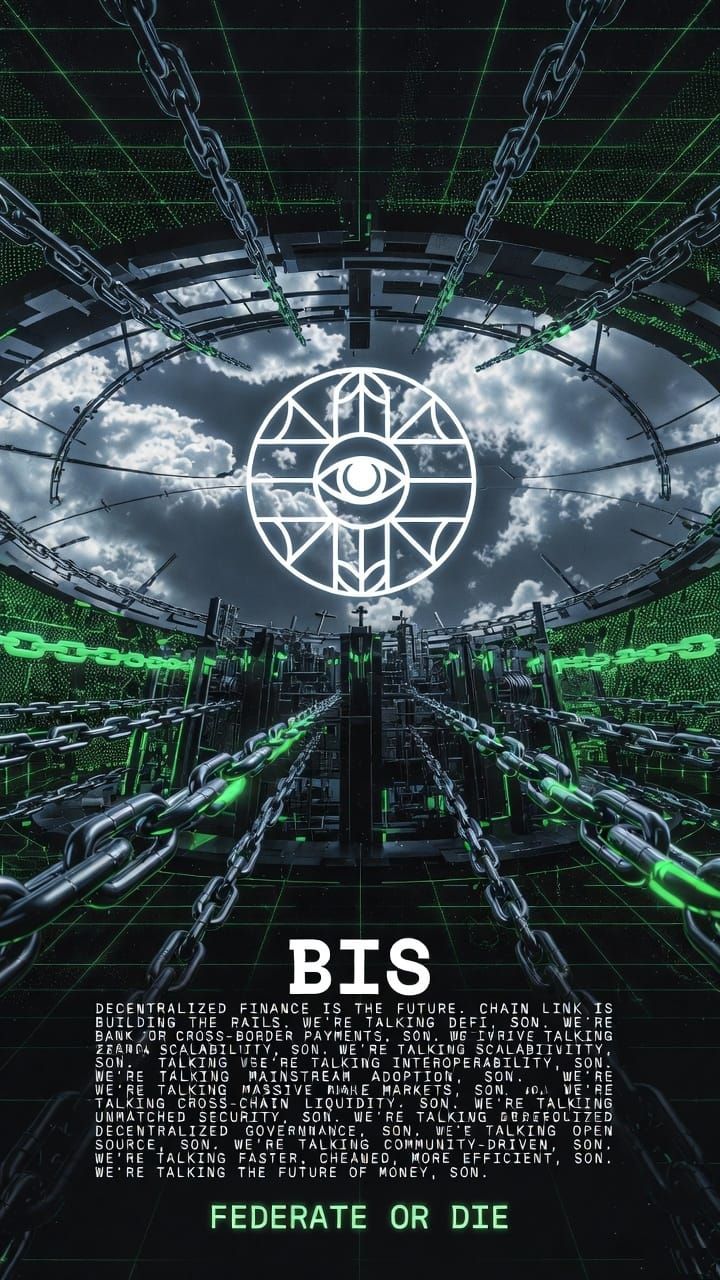
BIS unified ledgers (Agorá, Pine) merge central-bank reserves, deposits, and securities on one programmable platform. By 2030, $4T+ in tokenised debt is projected. DeFi must federate to these regulated rails or risk irrelevance as liquidity migrates.
NOVEMBER 2025 – last update : MARCH 11, 2026
EXECUTIVE SUMMARY
BIS Innovation 2025 is not another POC. It is the master plan for tokenised sovereignty. Unified ledgers merge central-bank reserves, commercial deposits, and government securities on a single programmable platform. Ethereum L2s and Solana are fast, but permissionless equals chaos. The BIS “trilogy” (singleness · elasticity · integrity) imposes order. By 2030, pilots like Agorá and Pine could tokenise $4 trillion+ in debt. DeFi faces a binary choice: federate to central rails or become irrelevant. The real game-changer is not disruption. It is absorption.
// 1. Tokenisation: From Ethereum Hype to BIS Blueprint
Tokenisation = representing a claim (reserve, deposit, bond) on a programmable ledger that bundles messaging, settlement, and compliance into one atomic operation.[2][3]
2025 numbers: >$4 billion in tokenised bonds across 9 currencies, bid-ask spreads down to 17 bp (vs 30 bp traditional), issuance costs now on par.[1] Next target: repo markets (€11T Europe + $6.5T US) via intraday tokenisation for elastic liquidity without credit exposure.
Source: BIS Annual Economic Report 2025 & internal estimates
// 2. Unified Ledgers: The BIS Trilogy vs Blockchain Fragmentation
The BIS trilogy (2025): 1. tokenised central-bank reserves (trust anchor) · 2. tokenised commercial-bank money (elasticity) · 3. tokenised government securities (real claims) — all on one programmable ledger.[2][4]
- Single DLT → uniform governance, maximum composability
- Hybrid → sovereign subnets under CB oversight
- Federated → interoperability via standardised APIs
Ethereum L2s hit 100 k+ TPS, Solana 65 k TPS, but suffer fragmentation, pseudonymity, and irreversible errors. Unified ledgers embed native KYC, finality via CB reserves, and pass the three tests that private stablecoins fail: singleness · elasticity · integrity.[3]
Active pilots: Agorá (7 central banks + 43 institutions), Pine (NY Fed), Mandala/Aurora (AI-driven AML with privacy preservation).[5][6][7]
// 3. Crypto Implications: Co-optation or Marginalisation?
BIS absorbs the best of blockchain (programmability) while retaining the kill-switch: central-bank reserves. ERC-20 is nice, but lacks finality. Solana is fast, but not elastic. Unified ledgers deliver both plus built-in compliance.
BIS vs Private Chains
- Governance: permissioned vs permissionless → institutions win
- Settlement: CB reserves vs reversible risks → goodbye Luna 2.0
- Compliance: native AML vs retro KYC → end of stealth dollarisation
- Scalability: federated without ceiling vs L2 bottlenecks
// 4. Tactical Outlook 2025-2030
- Federate now → build on Agorá/Pine APIs
- Tokenise CB-aligned RWAs → $4B market today → trillions by 2030
- Hedge sovereignty risk → stablecoins backed by reserves or face marginalisation
- Exploit controlled composability → smart contracts + embedded AML
- Position before 2027 → liquidity will migrate to unified rails
Unified ledgers do not break blockchain.
They domesticate it.
// REFERENCES
- Aldasoro, I., Cornelli, G., Frost, J., Koo Wilkens, P. and Shreeti, V. (2025) Tokenisation of government bonds: assessment and roadmap. BIS Bulletin No. 107. Bank for International Settlements. Available at: https://www.bis.org/publ/bisbull107.htm (Accessed: 11 March 2026).
- BIS (2025a) Annual Economic Report 2025. Bank for International Settlements. Available at: https://www.bis.org/publ/arpdf/ar2025e.htm (Accessed: 11 March 2026).
- BIS (2025b) 'The next-generation monetary and financial system', Chapter III in Annual Economic Report 2025. Bank for International Settlements. Available at: https://www.bis.org/publ/arpdf/ar2025e3.htm (Accessed: 11 March 2026).
- BIS (2025c) Press release: 'Next-generation monetary and financial system takes shape, based on a tokenised unified ledger', 24 June. Bank for International Settlements. Available at: https://www.bis.org/press/p250624.htm (Accessed: 11 March 2026).
- BIS (2025d) Project Agorá. Bank for International Settlements Innovation Hub. Available at: https://www.bis.org/about/bisih/topics/fmis/agora.htm (Accessed: 11 March 2026).
- BIS (2025e) Project Pine: central bank open market operations using tokenisation and smart contracts. Bank for International Settlements Innovation Hub. Available at: https://www.bis.org/about/bisih/topics/fmis/pine.htm (Accessed: 11 March 2026).
- New York Fed (2025) Project Pine: Central Bank Open Market Operations With Smart Contracts. Federal Reserve Bank of New York. Available at: https://www.newyorkfed.org/aboutthefed/nyic/project-pine (Accessed: 11 March 2026).
- PYMNTS (2025) 'Bank for International Settlements says tokenized unified ledger offers better solutions than stablecoins', 24 June. Available at: https://www.pymnts.com/cryptocurrency/2025/bank-for-international-settlements-says-tokenized-unified-ledger-offers-better-solutions-than-stablecoins/ (Accessed: 11 March 2026).
- Shin, H. S. (2025) 'The next-generation monetary and financial system', in Annual Economic Report 2025. Bank for International Settlements. Available at: https://www.bis.org/publ/arpdf/ar2025e3.htm (Accessed: 11 March 2026).
Ledgers unify. Chains fragment.
BIS is drawing the rails. Crypto: federate or become relic.
Strategic intelligence · Not financial advice · You are sovereign